Sunday, December 24, 2023

Australia Citizenship

Part 1—Australia and its people 

Part 2—Australia’s democratic beliefs, rights and liberties 

Part 3—Government and the law in Australia 

Part 4—Australian values

PART 1 - AUSTRALIA AND ITS PEOPLE 

 Aboriginal and Torres Strait Islander peoples 

=================================

> Oldest continuous cultures and traditions in the world.

> Aborigines are from mainland Australia and Tasmania. 

> Torres Strait islanders are from between the northen tip of Queensland and Paupua New Gunia.

> Aboriginal people arrive in Aus between 65k to 40k years ago.


European Settlement

===================

> 11 convict ship (First Fleet).

> Arrived from GBR on 26th jan 1788

> First colony in NSW.

> Governer of the this colony in NSW was Captain aurthur phillip

> Early FREE SETTLERS came from Great Britain and Ireland.

> 1851 Gold Rush began.

> Gold was discovered in NSW and Victoria.

> Chinese people arriving at this time were the largest group of non-Eurpoean people.

> Population doubled in 10 years.


The Nation of Australia

==================

> 1901 - separate colonies united into a Federation of States called The Commonwealth of Australia.

> In 1901 Australia's population was 4 million. [Did not include Aboriginal and Torres Islanders]

> Referendum in 1967 when they were included in official estimates.

> Non-British migrants came after world war II.

> Official language is English.

> More than 100 distinct Aboriginal and Torres Strait Islander languages.


Australia's states and territories

==================================


> The Commonwealth of Australia is a federation of states and territories.

> 6 states and 2 mainland territories.

> Victoria - Melbourne, New South Wales - Sydney, Queensland - Brisbane, Western Australia - Perth, South Australia - Adelaide, Tasmania - Hobard.

> Territories are: ACT / Australian Capital Territory - Canberra, and Northern Territory - Darwin.

NSW

------


  • First colony to be established.
  • Sydney is the capital
  • Nationa's largest city.
  • Sydney Harbour Bridge and Opera House: national icons
Victoria

---------


  •  Smallest of the mainland states.
  • Melbourne is the capital city.
  • Many fine buildings here built from wealth created by the gold rush in 1850s.
  • Mlebourne Cricket ground, 12 Apostles, Royal Exhibition Grounds: national icons
Queensland
--------------

  • Second largest state
  • Capital is Brisbane
  • Torres Islands are to the north.
  • Great barrier reef is to the east.
  • Has tropical rainforests, temperate coastal areas, and dry inland.
Western Australia
---------------------

  • Largest state
  • Perth is capital city
  • East is desert, south-west is rich agricultural & wine-growing area.
  • Has large Mining projects.
  • Icons are: Ningaloo coast, margaret river, Kimberley region.
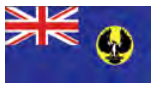
South Australia
------------------

  • Rugged coastline
  • Famous wine regions
  • Adelaide capital city
  • Has many examples of fine colonial architecture
  • Icons are Borossa valley, and Flinders ranges.
Tasmania
-----------

  • Smallest state
  • Bass strait separates Tasmania from Australia.
  • Icons are cradle mountains, port aurthur, bay of fires.

TERRIROTIES

Australian Capital Territory
---------------------------------

  • Nation's capital city
  • Several national institutions are located in ACT.
  • Icons: High court of australia and parliament house.
Northern Territory
----------------------
  • Tropical environment in the north and dry desert in the south.
  • Darwin is the capital city.
  • Icons: Uluru, Kata Tjuta, and Kings Canyon

IMPORTANT DAYS FOR AUSTRALIANS

1. Australia Day
  • 26th January.
  • Anniversary of arrival of the First Fleet from Great Britain in 1778.
  • During Australia Day celebrations, the Prime Minister announces the Australian of the Year Awards in Canberra. 
2. Anzac Day
  • 25th April
  • Australia & New Zealand Army Corps who landed in Galipolli in Turkey during World War 1 on 25th April 1915
  • Remember courage and sacrifice of Australians who served and died in wars, conflicts and peacekeeping operations.
  • Honour courage and commitment of servicemen and women
AUSTRALIA FLAGS

1. The Australian National Flag

  • Union Jack is the flag of UK. Represents our history of British settlement and the laws and institutions we inherited.
  • Commonwealth Star is under the union jack. Has 7 points - 6 for each state and 1 for the union territory. 
  • Southern cross to the right is a group of 5 stars that can be seen in the southern sky.

2. The Australian Aboriginal Flag

  • Black, red and yellow.
  • Top half black - represents aboriginal peoples of Australia.
  • Bottom half red - represents earth which has ceremonial significance.
  • Yellow circle is sun
3. The Torres Islander Flag

  • Green, blue, black lines and while sky with stars.
  • Green - land
  • Blue - sea
  • Black lines - Torres Islanders.
  • White dancers head-dress is a symbol of all Torres Islanders.
  • White star - represents the island groups.
  • White colour symbolizes peace.
AUSTRALIA'S SYMBOLS

1. Commonwealth coat of arms

  • Represents national unity
  • Shield in the centre represents the 6 states and federation.
  • Kangaroo to the left and Emu to the right of the shield.
  • Gold commonwealth start above the shield.
  • Background is golden wattle - Australia's national flower
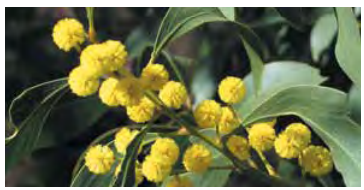
2. Australia's national flower

  • Golden wattle is the national flower
  • Grows in south-eastern Australia
  • Bright green leaves and golden yellow flowers - in Spring.
3. Australia's national colours
  • Green and Gold, colours of Golden Wattle.
  • Uniforms of National sports team is therefore green and gold.
4. Australia's national gemstone
  • Opal
  • According to Aboriginal legend, a rainbow touched the earth and created the colours of the opal
AUSTRALIA'S NATIONAL ANTHEM
  • "Advance Australia Fair" is Australia's national anthem.
  • Sung on occasions of national importance.
  • First lines of national anthem are: Australians all let us rejoice...
PART II - AUSTRALIA'S DEMOCRATIC BELIFS, RIGHTS & BELIEFS

Democratic beliefs
  • Parliamentary democracy: power of govt comes from citizens who vote them to parliament.
  • The rule of law: all Australians are equal under the law.
  • Living peacefully: chang should occur through discussion, peaceful persuasion, and democratic process.
  • Respect for all individuals regardless of background: regardless of race, country of origin, gender, sexual orientation, marital status, age, disability, heritage, culture, politics, wealth, religion.

Freedoms
  • Freedom of speech and expression
  • Freedom of association
  • Freedom of religion
Equalities
  • Gender equality
  • Fair Go: equality of opportunity in society.
Responsibilities & privileges of Australian Citizenship
  1. Obey Australian laws.
  2. Vote in federal / territory elections.
  3. Vote in referendum.
  4. Defend Australia if need arises
  5. Serve on Jury if called.
Privileges you get from Australia
  1. Vote in elections - federal, terriroty and in referendum.
  2. Get children born overseas to obtain Australian citizenship.
  3. Apply for jobs in Aus public service and defence.
  4. Seek election to parliament
  5. Apply for Aus passport
  6. Seek consular services / assistance from an Australian official while overseas
Participate in Aus society
  • Join neighbourhood and local community organizations.
  • Pay tax via ATO.
PART III - GOVERNMENT AND LAW IN AUSTRALIA

1. Voting
  • Citizens > 18 years can vote
  • Voting is compulsory; you pay a fine if you do not have a valid reason for not participating.
  • Voting is by secret ballot
  • Australian Election Commission (AEC) is responsible for elections.
  • Elections are conducted every 3 years
Federation
  • 6 self-governing British Colonies were there before 1901.
  • Each colony had its own separate law for everything (defence, immigration, etc.)
  • On 1st January 1901, colonies united into a federation of states called - Commonwealth of Australia
Australia constitution
  • Australian constitution is called - The Commonwealth of Australia Constitution Act 1900.
  • It's a legal document that has the basic rules for government.
  • Was originally passed as part of a British Act of Parliament in 1900.
  • On 1st Jan 1901 it came into effect.
Parliament of Australia
  • House of Representative (similar to Lok Sabha) / Lower house [151 MPs]
  • Senate (similar to Rajya Sabha) / Upper house [76 Senators - 12 from each state (12x6 = 72) and 2 each from Territories (2x2 = 4)]
Courts of Australia
  • Highest court is High Court of Australia (similar to our Supreme court)
Referendum
  • Voting on specific issues.
  • 1967 referendum was to count Aborigines to be counted in the Census - 90% voted Yes.
Power of Government
  • Legislative power - power to make laws.
  • Executive power - power to put laws into practice.
  • Judicial power - power to interpret the laws and apply the law.
Australia's Heads of State
  • Australia has a Constitutional Monarchy - Head of state is the King of Australia, His Majesty King Charles III.
  • King appoints Governer General as his representative in Australia. (King seeks advise from the prime minister to appoint the governer general)
  • Governer general is independent of political parties.
  • King does not participate in day to day role in govt.
  • Aus system is a combination of UK and US democracies.
Governer General
  • Governer General is similar to India's president (rubber stamp), but is an important role.
  • King chooses governer general in consultation with Aus PM.
  • Gov general
    • Signs bills
    • Performs ceremonial duties.
    • Approves appointment of govt / ministers, judges
    • Starts process for federal election.
    • Is the commander in chief of Australian Defence Forces
AUS Leaders


Comparison to India
  • Governer general - similar to president of India
  • MP - same as MP of Lok Sabha
  • Senator - similar to Rajya Sabha member.
  • PM - same as PM of India (leader of the winning party).
  • Premier - similar to chief minister of a state in India.
  • Mayor / Shire President - similar to mayor of municipality in India.
  • Chief Minister - similar to Lt. Governer of Union Territory in India
How is Australia Governed?

Federal Government / Commonwealth government
  • House of representatives 
    • Lower house
    • Australia has electorates (similar to indian districts from where each MP gets elected)
    • Aus citizens vote MPs to the house of representatives
    • There are >150 members (151) elected to house of representatives
  • Senate
    • Upper house
    • House of Review
    • States' House
    • Voters from each state also vote to elect senators
    • All states are equally represented - 12 from each state and 2 each from territories.
    • Senators consider, debate, and vote on new laws or change in laws.
  • State and Territory Govt
    • 6 states and 2 territories.
    • Each state has its own parliament and constitution.
    • Leader of state is Premier.
    • Leader of territory is Chief Minister.
    • In each state Governer represents King of Australia.
    • In NT an Administrator is appointed by the governer general.
    • Roles and responsibilities of administrator in territory is similar to Governer in each state.
    • States have rights recognized by constitution, territories do not.
    • States can pass laws; however territory self-governing laws can be alterred of revoked by Aus govt.
    • Territory is similar to Indian Union Territory (Pondicherry)
  • Local Govt
    • City --> Shires --> municipalities / towns.

-
-
-
-
-

OUR VALUES

1. Commitment to rule of law

- Rule of law is above everything and everybody is expected to follow the rule of law

2. Freedom of speech

- People should be able to express their ideas freely, as long as it's within the law.
- Free to meet in public / private places for social or political discussions.
- People are free to say or write about any topic, discussing their ideas with others. 
- People can protest peacefully against govt. 
- Violence is not tolerated.
- Illegal to make false accusations.
- Illegal to encourage others to break law.
- People's freedom of speech should consider & respect other's freedom of speech.
- Freedom of speech must be lawful. 

3. Freedom of Association

- Join or leave a group as long as it is within law.
- Join legal org, political party, union, religious group, cultural / social group.s 
- Individuals cannot be compelled to join or forced to leave.
- Can peacefully and within-the-law protest against the govt. no damage to property, no injury. no breaking laws.

5. Freedom of religion

- No official religion.
- People are free to practice any religion.
- Religious practices must not break Australian laws.
- Religious laws have no legal status in Australia.
- When in conflict, Australian laws trump over religious laws.
- Polygamy is a crime.
- Forced marriage is a crime.
- Religious intolerance is unacceptable.


Monday, December 26, 2022

Hadrons


Quarks and Leptons

> Electrons are elementary particles belonging to the family of Leptons. They  have no known sub-components or substructure.

> Protons on the other hand are composed of several types of quarks bound by gluons. Matter keeps forming, annihilating, and reforming.  


Source: Science Discussed - Revealing the Mysterious World Inside Protons - YouTube

Monday, February 15, 2021

My sayings...

 As long as you continue to hold someone in admiration, you will not be able to critique them dispassionately!

Wednesday, July 15, 2020

Positivism vs. Interpretivism vs. Postmodernism - Quora

  • Positivism: Only verifiable (and refutable) scientific inferences are "knowledge". All the rest is emotion and psychology.
  • Interpretivism: The social sciences are the realms of "non positivist" knowledge, and are not subject to simplistic scientific verifications/refutations.
  • PostModernism: All knowledge has social infrastructure. One cannot disentangle them completely. So what constitutes knowledge is socially constructed, and not "impartial" or "objective".

Capitalism vs. socialism


Sunday, July 12, 2020

Types of schools in Australia

    • Govt / Public
    • Selective
    • Catholic (Per Year 3,500 AUD)
    • Private
    • Gift and talented (semi selective)

      Sunday, July 5, 2020

      Postmodernism

      Relates to western thought; has three eras:
      1. Pre modern:
        • Before science came
        • There were kings
        • Church held roost
        • Church issued bulls - Pope could issues - like fatwa
      2. Modernity (of Europe, US, etc.)
        • Challenge to church
        • Role for science
        • Separate role for religion
        • Industry
        • Technology starts
        • Capitalism
        • Free enterprise
        • Material success
        • Slavery & genocide, Colonial loot leading to wealth - Rockefeller, Phillip Morris, etc.
        • Done brilliant things due to Science, industrialisation, etc.
      3. Post modernity
        • 20th century
        • When they realised modernity produced some ugly things - communism, Nazism, etc.
        • There is a crisis
        • Is the latest fad
        • It attacks modernity (attacks slavery, exclusivity)
        • Attacked grand narratives of modernity
        • Indians lack the context of our own culture and civilization, suffer from an inferiority complex, brought post-modernity into India, started "Deconstructing" and started the "Indian Grand Narrative".

      • Modernism started with the industrial revolution. 
      • Modernism saw attempts to explain society, human behavior, politics, sexuality with all-embracing theories called Grand Narratives.
      • Modernism rejected culture and tradition.


      Saturday, June 27, 2020

      Derrida on incompleteness of text and "Author is dead"

      Jacques Derrida was the best-known French philosopher of the 80s and 90s, yet many find it difficult to grasp his ideas. He asked complex philosophical questions about texts and textuality. He invented deconstructionism, which emphasizes the necessary incompleteness of texts. That is to say, “Deconstruction is used to show that a work does not adequately address something.” (Faulconer, Deconstruction, p.4) Derrida argued that there are many possible interpretations of any given text, and readers can play with texts as if playing with toys. According to Derrida, “what we get when we read a text is not an objective account of logos or even what the author really meant, but our present interpretation or understanding of the text itself. This understanding becomes so to speak, our own [text] of the text.” (quoted by Ozmone & Craver in the Philosophical Foundations of Education, p368.) So Derrida disputed the idea that the meaning of a text does not change. Moreover, he challenged the author’s intentions, and shows that there may be numerous reasonable interpretations of a text. I agree with Derrida about these things. This is where the idea of ‘the author is dead’ arises: once the text is written, the author’s input loses its significance.

      - Philosophynow.org


      Sunday, October 6, 2019

      Places to visit in New South Wales, Australia


      • Macquarie chair
      • Opera house
      • Wharf rides
      • bondi beach
      • Northern beaches lighthouse
      • Bluemountains
      • kiama
      • Entrance central coast
      • somersby falls
      • Wedding cake rock
      • royal national park
      • Figure 8 pool
      • Jelly bean pool national park
      • Wentworth falls
      • Empress national park
      • Kiama blowhole
      • jenolan caves
      • Wiseman ferry
      • Wombeyan caves
      • Cessnock iskcon temple
      • Port stephens
      • Nelson’s bay
      • 5 hrs drive 370kms Montaguyigue island.
      • Sydney to narooma then catch ferries to Montague island to watch seals
      • Grand Canyon walk
      • Eagle rock royal national park
      • cattai national park
      • Lane cove national park
      • Warrangamba dam
      • Illawarra beach
      • Watson bay
      • Jarvis beach kiama berry nowra
      • La Peru's
      • Nelson bay
      • Wattamola beach
      • Caves beach
      • Lake Macquarie
      • Carrington falls
      • New castle
      • The entrance
      • Hunter valley
      • Wollongong


      ====

      Distance from Parramatta

      Blaxland park – 10 Kms
      Featherdale park (touch koalas and feed kangaroos.) - 15 kms
      Cockattoo island 30 min journey - 19 kms
      Fagan park -26 Kms
      Ku-ri-nggagai national park Bobin head – 30 Kms
      Luna park - 33 kms
      Drive to blue point reserve - 35 kms
      Taronga zoo -35 kms
      Cranula – 38 Kms
      Berowara ferries - 38 kms
      Le peruse beach - 40 Kms
      Cronulla beach - 40 kms
      Coogie beach – 42 Kms
      Bondi beach - 42 kms
      Collins beach - 42 kms
      Bronte beach - 42 kms
      Royal national park - 42 kms
      Hawksberry river - 45 kms
      Long Reef beach – 50 Kms
      Symbio park - 55 kms
      Wottamolla beach - 55 kms
      palm beach ( awesome) - 56 kms
      Garie beach - 60 Kms
      Wiseman ferry - 61 kms
      Wentworth falls - 70 kms
      Central coast – 70 Kms
      Gosford – 70 Kms
      Umina beach (near to patong) - 80 Kms
      Blue Mountains – 80 Kms
      Avoca beach - 85 Kms
      Killcare beach - 90 kms
      The entrance - 95 kms
      Morriset park(kangaroo feeding)-115 Kms
      Caves beach -125 Kms
      Fitzroy Falls - 130 kms
      Jenolan Caves - 150 Kms
      Lucas cave - 150 Kms
      Kangaroo valley - 150 kms
      ****************************************
      Jervis Bay (white sand beach) - 220 Kms
      Famous berry donut van
      Hyams beach ( white sand) - 215 Kms
      Huskisson pub in huskisson town-210 km
      Army area
      ***************************************
      Jervis bay - 220 kms
      Katoomba winter festival
      Port Macquarie - 380 kms
      Hunter valley(wine tasting tour) - 238 Kms
      Snowy Mountains – 480 Kms
      Canberra – 280 Kms
      ***************************************
      Kiama: 145 Kms
      1. Helensburg temple – 56 Kms
      2. Stanwell park lookout – 60 Kms
      3. Sea cliff bridge (GRAND PACIFIC DRIVE) – 65 Kms
      4. Austinmire beach – 75 Kms
      5. Wollongong city – 114 Kms
      6. Port kembla – 120 Kms
      7. Minnamurra falls – 142 Kms
      8. Kiama blow hole – 144 Kms
      9. Little blow hole – 148 Kms
      10. Nantein buddhist temple - 120 Kms
      ******************************************
      Port stephen: 200 Kms
      1. Whale & Dolhin watching
      2. Parasailing
      3. Gangan lookout – 201 Kms
      *********************************************
      Gold coast – 840 Kms
      Sand Dunes – 960 Kms
      Philip island – 1,015 Kms
      Tasmania – 1400 K

      Day 1:
      Sea world, madame tussades, wildlife during the day &
      Opera house, darling harbour during evening time.
      walk through botanical gardens to Mrs Macquarie’s chair and see ongoing Jacaranda bloom
      There'll be vivid light show at Opera house at 7 pm (or my be later since its summer time). Easy to commute using public transport.
      Day 2:
      Trip to the Blue Mountains, which will take an hour from Parramatta. Visit three sisters, and scenic world train ride little bit of trekking if you like to and back home
      Day 3:
      Beaches and peaches, visit Bondi, Manly beaches.
      Easy to commute using public transport.
      Day 4:
      Visit to the city, market Street, shopping, food, going around enjoying the city vibes during Christmas time. Come back and rest.
      add Hyde park(Archibald fountain),
      St Mary’s cathedral,
      Sydney Tower( visit in evening near sunset time to get day and night view of the city)
      Sydney the Full List
      1) The Harbour / Circular Quay / the Rocks (self guided walking tour - google one) / Lady MacQuaries Chair: the classic vista of the Opera House and Harbour Bridge, with the nearby Botanic Gardens and Taronga Zoo.
      2) Watsons Bay via ferry from Circular Quay: the Light house and the views of Sydney from the Eastern Suburbs
      3) Coogee to B

      Monday, July 1, 2019

      Excerpts from 101 Essays that will change the way you think...

      1. You believe that creating your best life is a matter of deciding what you want and then going after it, but in reality, you are psychologically incapable of being able to predict what will make you happy.

      Your brain can only perceive what it’s known, so when you choose what you want for the future, you’re actually just recreating a solution or an ideal of the past. When things don’t work out the way you want them to, you think you’ve failed only because you didn’t re-create something you perceived as desirable. In reality, you likely created something better, but foreign, and your brain misinterpreted it as “bad” because of that. (Moral of the story: Living in the moment isn’t a lofty ideal reserved for the Zen and enlightened; it’s the only way to live a life that isn’t infiltrated with illusions. It’s the only thing your brain can actually comprehend.)

      2. You extrapolate the present moment because you believe that success is somewhere you “arrive,” so you are constantly trying to take a snapshot of your life and see if you can be happy yet. You convince yourself that any given moment is representative of your life as a whole. Because we’re wired to believe that success is somewhere we get to—when goals are accomplished and things are completed—we’re constantly measuring our present moments by how “finished” they are, how good the story sounds, how someone else would judge the elevator speech. We find ourselves thinking: “Is this all there is?” because we forget that everything is transitory, and no one single instance can summarise the whole. There is nowhere to “arrive” to. The only thing you’re rushing toward is death. Accomplishing goals is not success. How much you expand in the process is.

      3. Bad feelings should not always be interpreted as deterrents. They are also indicators that you are doing something challenging and worthwhile. You learn the most when you put yourself into uncomfortable situations that let you grow, bring out the best, and nudge you to adapt yourself.

      4. To change your beliefs, new line of thinking is not enough. To make real changes, seek experiences that will cause you to make changes to your belief and thus change you! A belief is what you know to be true because experience has made it evident to you.

      5. Problems are not roadblocks to achieve something. They are in fact catalysts to make your life better by forcing you to take action to resolve, behave differently, and actualise the life you wanted. They push you from your comfort zone.

      6. You think your past defines you, and worse, you think that it is an unchangeable reality, when really, your perception of it changes as you do.

      Because experience is always multi-dimensional, there are a variety of memories, experiences, feelings, “gists” you can choose to recall… and what you choose is indicative of your present state of mind. So many people get caught up in allowing the past to define them or haunt them simply because they have not evolved to the place of seeing how the past did not prevent them from achieving the life they want, it facilitated it. This doesn’t mean to disregard or gloss over painful or traumatic events, but simply to be able to recall them with acceptance and to be able to place them in the storyline of your personal evolution.

      7. Most negative emotional reactions are you identifying a dissociated aspect of yourself. (As in my case when I react sharply on seeing my daughter regurgitating a "forced' feed, I am reminded of my own childhood... and about similar ways I fed myself and puked).


      Australia Citizenship

      Part 1—Australia and its people  Part 2—Australia’s democratic beliefs, rights and liberties  Part 3—Government and the law in Australia  Pa...